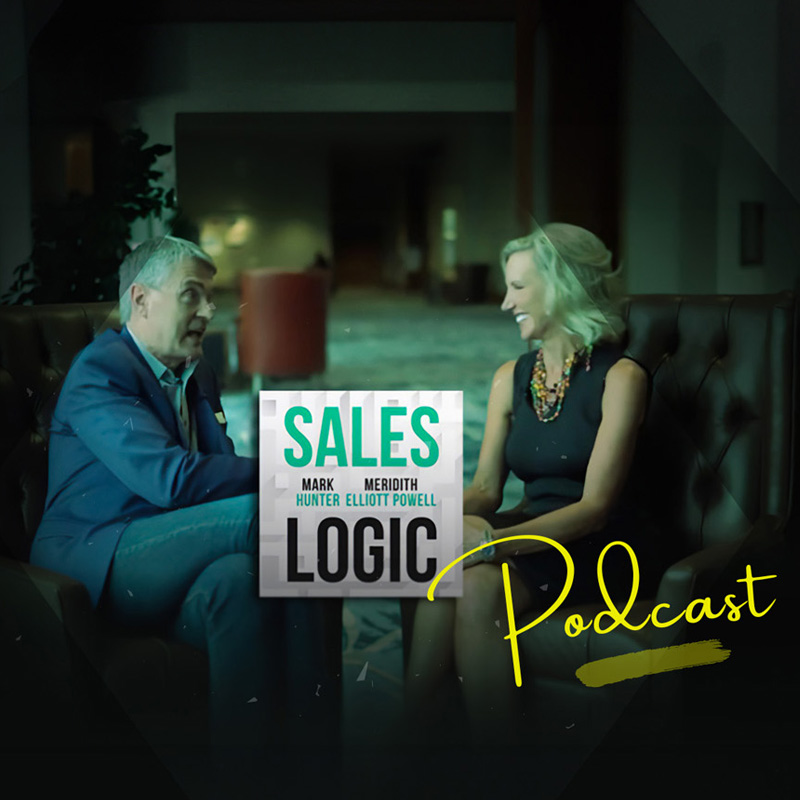
On a recent episode of The Sales Hunter Podcast, Mark sat down with Jen Allen-Knuth, former Challenger executive and sales thought leader, to unpack one of today’s toughest selling challenges: what do you do when buyers want to build their own solution instead of buying yours, especially now that AI makes building in-house easier than ever?
The Rise of Build vs. Buy and Why It’s Hitting Sellers Hard
In the past, “build vs. buy” was an old debate. But as Jen Allen-Knuth points out, AI has transformed the game for buyers:
“Now there’s all these juiced-up status quo alternatives, where I can go to Claude, ChatGPT, whatever AI chatbot, and I can start asking it, what can you build for me so that I don’t have to go and shop and buy a solution off the shelf?”
For sellers, it means buyers have more in-house options than ever. Many times, leadership is pushing teams to experiment and save costs. The pressure comes from the top: PE firms, VCs, CEOs pushing innovation, often regardless of whether the people responsible actually believe a “build” option is best.
So sellers today are facing a new breed of competitor: not another vendor, but their prospect’s own internal build team often supercharged by AI.
Why Attacking “Build” Backfires
When sellers hear that a company might try to build something internally, the natural instinct is to jump into defense mode and list all the reasons it won’t work. That’s the wrong approach.
Instead, as Jen says, start by agreeing and seeking to understand:
“Before you tell someone why they’re wrong, first tell someone why they’re right.”
When a prospect wants to run a “book club” instead of pay for professional training, that’s a sign they’re bought into the problem you solve, but they’re just not sold on your unique value. The opportunity is to learn what their plan really involves. Sellers who listen first can help prospects discover where internal builds typically go off the rails, and then gently insert their own expertise.
Three Steps to Selling Against Build
Jen laid out a practical, three-part play for sellers up against the DIY urge:
- Acknowledge the Value: Celebrate their belief in your approach or problem framing.
- Ask Them to Walk Through Their Plan: Listen for where the plan might create friction internally (like “organ rejection” from other departments).
- Offer Advisory Help: Suggest an audit or a one-hour consult with leadership from different departments. Share pitfalls you’ve seen elsewhere, and position yourself as a guide, not an adversary.
Through that process, sellers earn the right to point out risks, add insight, and set the stage for re-engagement if the internal effort fails.
Why “Intent Data” Isn’t The Magic Bullet
With budget pressure rising, many sales teams are leaning into intent signals and signals-based tech. That’s not working like it used to. It’s not unusual for sellers to pile into bidding wars over the same “hot” accounts, chasing the same signals as everyone else.
Intent data is noisy and often misleading. Buyers browse with no intent or mask their tracks entirely:
“It is so easy to get fake intent signals. And I think the customer is becoming smarter by disguising their intent signals.”
Sellers relying too heavily on this data fall into the trap of chasing, not differentiating. Meanwhile, the customer gets flooded with the same outreach from too many reps.
Relationships Still Win
Prospects don’t want to be bombarded with product pitches. They’re looking for real, thoughtful conversations about their business challenges.
Today, sales leaders need to ditch the flood approach. Success comes from being intentional, showing up with insight, and initiating real conversations.
Speed isn’t the ultimate goal. Smart sellers slow down to deliver value in every interaction. Sales tech may have opened the floodgates, but the sellers who use it thoughtfully are standing out for the right reasons.
AI Isn’t Replacing Prospecting, It’s Raising the Bar
Prospecting has never been a low-value activity. The first impression matters more than ever, and it can’t be outsourced to the lowest bidder or fully automated by AI.
AI can make research faster. It can summarize and analyze. But it can’t replace genuine curiosity, insight, or the relationship-building skills that move deals forward. The sellers who win use AI for leverage, not as a crutch.
The Pipeline Isn’t About Volume, It’s About Focus
Piling leads into the top of the pipeline to appease the boss is a sure way to end up with a “sewer pipe”—quantity without quality. The real goal is to create a water tap: a focused, qualified pipeline you can actually move.
Sales leaders need to resist the urge to fill the top just to keep management happy. Instead, every deal, every prospecting touchpoint, should be about delivering value and learning something new about the account.
Earn the Right to Sell Every Time
Selling into the “build vs. buy” decision is tough, especially in a world where buyers can spin up solutions overnight with AI. The playbook has changed:
- Show up with insight, not just intent data.
- Engage prospects in a genuine exchange about their internal plans.
- Deliver value with every touch, even if it takes multiple attempts.
Mark’s recurring mantra says it best: It’s not about you, it’s about the customer. Each message, each conversation, is just about earning the right, the privilege, and the respect to try again and move the dialogue forward.
That’s how sellers stay in the game and win, even when buyers think they can build it all themselves.
Mark Hunter :
Oh, the status quo is out to get you and in more ways than one. In fact, you know what’s interesting is the status quo is actually getting smart because now it’s this— they’re actually building it. What are we talking about? We’re talking about customers that really don’t want to do business with you. Why am I talking? Let’s get the show going right now. And I got a great expert that’s going to come in and join us. Stick around.
Jen Allen-Knuth :
You’re listening to the Sales Hunter Podcast with Marc Hunter, where the focus is to help you as a sales leader sell with confidence, The Status Quo.
Mark Hunter :
And we have anybody but the status quo with me, Jen Allen Knuth. It is great to have you on the show finally. How many years have we waited patiently?
Jen Allen-Knuth :
Marc, way too many. And can I just say, we just came up with this topic about 3 minutes ago. And the way I know you’re a killer prospector is you just killed that opener. You turned that into such a Sexy opener. That is a natural-born prospector right there.
Mark Hunter :
Hey, my last name’s Hunter, so I do know how to sell. It’s in your blood. Yeah. Hey, anyway, Jen, thank you for jumping in here. Let’s talk about this whole thing of status quo because status quo is getting steroids. And what do we mean by that? Because customers are choosing to build instead of buy. And a lot of salespeople aren’t familiar with that. So why don’t you unpack that? Because Sales, it’s ugly.
Mark Hunter :
It’s ugly out there.
Jen Allen-Knuth :
It’s ugly and it’s hard. And I think the toughest dynamic is often case the prospect that we’re selling to, the CRO, the CIO, the CISO, whoever that may be, it’s not even necessarily that they themselves want to build. It’s the pressure that they’re feeling downwards from CEOs and PE firms and VCs that are saying, we need you to show that you’re experimenting. And so, It’s a really interesting dynamic where you might have an individual who doesn’t even believe in the build case. But because they are feeling pressure, and because if you are behind on AI, you’re not a great leader who will make it, I think that dynamic is making it even more interesting, where they’re exploring build use cases that they themselves might not even be bought into.
Mark Hunter :
OK, unpack the build use case, because again, there could be people out there who really haven’t really aren’t familiar with this concept we’re talking about?
Jen Allen-Knuth :
Yep. So, when we compare buy versus build, buy has traditionally been a mechanism, like when something is wrong, you start pulling the lever and you start shopping and what solutions exist out there in the marketplace. Build has always been a competitor to that. And when I think of build in the classic sense, I think of the wonky spreadsheets that everybody has been using, the back of the piece of paper, that people track on, which we hold on to because, one, it’s quote-unquote free; two, it’s what we know, and we love what we’re comfortable with. But to your point, now there’s all these juiced-up status quo alternatives, where I can go to Claude, ChatGPT, whatever AI, like, you know, chatbot, and I can start asking it, what can you build for me so that I don’t have to go and shop and buy a solution off the shelf? Which means a couple things. One, I get to walk around my office and say, we built this, we built this, and aren’t I AI forward? But it also means I don’t have to pay a monthly fee that’s usage-based. And that also looks good to the organization. So build versus buy has always existed.
Jen Allen-Knuth :
It’s just now, to your point, it’s easier for people to do it because of Claude Code and, you know, Codex and all these other AI tools that allow you to do it in-house.
Mark Hunter :
Yeah. And now, hey, and although we’re talking here about the tech space, this also applies in manufacturing because a lot of times Companies will say, well, why do I need to buy this component from you? We’ll just manufacture it in-house. We have people that can take care of that for us. So this whole in-house status quo is becoming a bigger and bigger issue in whatever business you happen to be in. But what’s the downside of it? How do we sell around it?
Jen Allen-Knuth :
The downside is obviously it’s a completely new competitor and one I think many sellers are not as equipped equipped to deal with. So if I’m selling a forecasting tool, and I’m a salesperson, I’m probably very well-versed in where we competitively differentiate from competing forecasting tools. But 2 problems happen in a build versus, like a new build versus buy era. One is that I hear a lot from clients is one, the build cases might not even be on forecasting. But because we have resources tied up in other areas, like I don’t know, compensation modeling, or, who knows, account mapping, any of these things, it means I can’t even focus on making a change to forecasting because we’ve got so much internal resources. So I actually lose here because this priority falls below these. The second problem is, and I was up against this at Challenger, when someone tells you that they are now debating between, do I buy an off-the-shelf you know, thing? Or do I build it in-house? Our natural tendency, I think, as salespeople— mine certainly was— was to immediately jump in and say, well, this is why that’s a bad idea. And the second we do that is the second we now feel like we’re at odds with our prospect, and we create this offense-defense dynamic, which is really hard to recover from.
Jen Allen-Knuth :
I certainly made that mistake when I was selling Challenger Sales Methodology. You can imagine how many times someone would come in and say, I love Challenger, and I want to train everybody on my team on Challenger. Until they saw the cost of the implementation, they’re like, you know what? A book club sounds great. And so in those moments, you know, at that point as a salesperson, I feel like I’m losing something. And so now I go on the defense. My, me, I’m telling them all the reasons why that’s a bad idea. And you can almost feel the distance growing between us. So I think that’s some of the problems that I personally have had selling against it, but also others that I’ve seen.
Mark Hunter :
OK, I want to run with that. First of all, you dropped the word challenger because, yes, if the audience isn’t familiar with Jen Allen, You were with Challenger for a number of years, so you really understand the Challenger customer, the Challenger sale, all that very, very well. So you do come with a little bit of credibility, even though, even though, even though you’re a Milwaukee Brewers fan. So that’s an inside joke. That is totally inside. Inside.
Jen Allen-Knuth :
Okay.
Mark Hunter :
I want to explain that because this can really set up well for the listening audience. You were talking about, you know, we’ve got this great solution, Challenger Sale Methodology. It’s 7 figures. Oh, we’ll do a book club. So, how did— because that’s an example that people can relate to, a cheaper alternate solution. How do you suggest salespeople navigate through this? Because I think more salespeople are finding themselves in this type of situation. More now than ever.
Jen Allen-Knuth :
I would agree. So your first tendency, like I said, is to go on the defense. It’s actually the opposite, right? If I’ve got someone, we’ll use this example. If I’ve got someone who says, I like Challenger enough to say we’re going to build something internally, if it’s a book club, if it’s a, you know, in-house Challenger methodology, that is still a good thing. It means they believe in what we’re doing. So that is a positive sign. So instead of saying, well, this is why it’s going to fail, The first thing I’m doing is agreeing with them. Now Brent Adamson, who we were chatting about before we hopped on, has a killer quote that I remember the moment that I heard it.
Jen Allen-Knuth :
I’ve never forgotten it, which is, before you tell someone why they’re wrong, first tell someone why they’re right. And I loved it, right? Because it’s like, it defies a lot of objection-handling, you know, theory. And so the way I interpret that is to say, this is great. It’s so great that you see why Challenger Thinking is going to help perform your reps. So walk me through how you’re thinking about structuring that book club, right? And it’s, defense is down; I’m not attacking it. As they’re talking, what that’s telling me is a lot about their beliefs and assumptions. The more I know about their beliefs and assumptions, the more I know why they’re sort of designing the program that way. So I’m listening with the intent to understand, not to objection-handle.
Jen Allen-Knuth :
And as they’re talking, What I’m doing is I’m kind of creating a tally list of what are the things I’m going to celebrate? And what are the things where I’m going to offer insight? So for example, I might say, I love the way that you’ve cadenced this out, like a one, once-a-week, you know, 1-hour thing feels like the right amount, because I’ve seen some other clients where they go way too hard. It feels like an obligation for your reps, and you lose rep confidence in the model. So I’m celebrating what I hear that sounds like a good practice to me. And then I’ll start digging in on places where I know a build kind of DIY use case can go off the rails. So the perfect example with Challenger was, we’ll build messages. And then we’ll have, we’ll give those to our sales team to go out and, you know, use in the field. And so there, I’ll say, would you be open to me sharing a few ideas around some of the pros, cons of that, that I’ve seen from working with other companies? So the way I label that is, I’m a window into what other organizations have done. And because I’m not attacking them, I’m more likely to get receptivity to it.
Jen Allen-Knuth :
And so there, I would say, you know, one of the things I’ve seen clients do, I’ll label status quo. Sales sits in a room, we create a message, we send it out to the field, but then you get organ rejection from products, from marketing, from operations. And all that great work you spend doing the message construction falls flat on execution. So then, this is step 3, Would you be open if we did this? And this is some sort of audit, some sort of like consulting advisory-type conversation, where it inserts me into their process. So an example, going on that same track, might be, would you be open if we gathered sort of a tiger team from sales, marketing, and product together? And I can kind of play a role of helping guide the way that you’re thinking about it. Because my objective is that you see success, whether it’s build or buy. And so it’s, it’s got to be a realistic timeframe. So I’m not offering like my 8 weeks of time, but I’m saying 1 hour.
Jen Allen-Knuth :
And that’s going to get me in front of the group. And that, in that second interaction, that’s going to give me the opportunity to now be viewed as more of the subject matter expert, where I have a little bit further forward of a step to say, OK, great. Now, here’s something that I think the group might be missing. And let’s like spend a little time on that. So ultimately, and this is where I learned from Challenger, like you’re leading to the thing that you uniquely offer. But instead of confronting the customer right off the bat, you’re showing up as helpful. Because the other thing we don’t control is sometimes you got to let people fail and then come back. But I need them to come back.
Jen Allen-Knuth :
And if I wish for their failure or I prescribe their failure, I do think there’s a bit of an ego in that, where they’re unlikely to come back to me. So those 3 steps are typically how I handle it.
Mark Hunter :
OK, you just gave a case study. If you’re listening to this, what, what Jen Ellen just, just shared was a case study On how to deal with status quo. Don’t attack it. Don’t walk away from it. Embrace it. Engage them. Engage them in the conversation because it keeps you, so to speak, alive for another day. But you do truly find out where the customer is coming from because so many times there is a problem because of maybe budget, maybe timing, maybe other priorities, maybe other things.
Mark Hunter :
And it’s not going to get fleshed out until you have that level of conversation. That was excellent what you shared. Thank you. Yeah. Yeah. What, what are some other things that you’re seeing happening out there in this crazy landscape that we see from a sales perspective that we need to stop doing?
Jen Allen-Knuth :
I’m very curious for your take on this. And I know that this might not be a super popular take, but I have, I have a large amount of skepticism towards this whole movement to rely on intent signals and triggers and technology like that. Like, I’m like, the analogy I use is if you were shopping for a house and a perfect family home popped up in your ideal zip code and you got that alert on Zillow, you and every other freaking starter family are running to that same house and now it’s a bidding war. And I feel like in many ways intent signals have made it so we are all running into bidding wars and then wondering why we’re back and forth competing on product features and price when we’re— because of the, the availability of signal-based technology, most people are tracking the same thing. So we’re sending our, our sellers basically into that bidding war. But what’s your take?
Mark Hunter :
Oh, I totally agree with you. And I think there’s so many fake intent signals. I’ll give you an example. You brought up the word Zillow last night. Uh, my wife and I noticed there’s a house up the street that was up for sale. So my wife went out on Zillow last night. We have no intention. We have no— she was just curious, just curious.
Mark Hunter :
And yeah, that would flash as an intent signal. Oh, hunters are looking to move. No, we’re not. We’re very happy where we’re at. Okay. But I think this is— it is so easy to get fake intent signals. And I think the customer is becoming smarter By disguising their intent signals.
Jen Allen-Knuth :
Oh, say more, say more, because I love this training.
Mark Hunter :
I see whether— I mean, they are going out using VPNs, they’re using different emails, they’re using all kinds of different things to hide their tracks in terms of looking at things. Because again, we’ve seen plenty of studies that show that customers really don’t want to engage with salespeople. Until they’re ready to buy. Because why? Because they feel salespeople don’t bring value. Ding, ding, ding, ding. Wow. We just shot the elephant in the room. Yeah.
Mark Hunter :
Yeah. We should have sound effects on this show. You should.
Jen Allen-Knuth :
Explosions.
Mark Hunter :
It’s like, what’s going to happen?
Jen Allen-Knuth :
I agree. And if you think about right now, I think the biggest period of uncertainty I ever sold through was the 2008 economic crisis. And I’d love to say I navigated that flawlessly. I didn’t. It was a huge learning lesson for me. But now we’re in this period where everything is upended. All conventional wisdom is upended. Every executive is looking up, left, and to the right, saying, what are you doing? And what are you doing? And instead of recognizing that and doing what you said, which is instead of taking those executives and say, do you want to see a demo? Do you want to set up 30 minutes to talk about our solution? Instead of leaning into it and say, gosh, it’s such a, like, it’s such a wild environment to know what’s up and what’s down.
Jen Allen-Knuth :
We’ve worked with a few companies and we’ve got a point of view on what we’re seeing. That, to me, is a much better door opener than, I want to show you my AI tool, which, by the way, I could probably go on your website and demo without even talking to a sales rep because I don’t want to be stuck in your pipeline because I know the second I accept that sales call, you’re never going to let me out of your sales pipeline. So I just think we have to have a different conversation entirely.
Mark Hunter :
Yeah, I mean, I’m getting tired of getting these emails from this Jen Allen-Knuthe. I mean, I must get 10 emails a day from her. It’s unbelievable. It’s unbelievable. Yeah, I mean, it just— but, but this is, this is the case. And, and I think you hit on something else very softly, but let’s come back to it. I think people more than ever are looking for the genuine, authentic relationship. They want to have a conversation, not so much around the product.
Mark Hunter :
Let’s have a conversation around the problem. And I know you talk about that because it’s right out there on your website. See, I was snooping around on your website.
Jen Allen-Knuth :
Ah.
Mark Hunter :
And that’s what people But we’ve just geared to just flood them with product stuff and somehow the customer’s going to buy. I mean, if I can send out a bad email to one person, it’s a bad email, but I send it out to 1,000 people, oh heck, 10,000 people, it’s really stupid. And yet that’s what happens.
Jen Allen-Knuth :
Yeah, that’s stupid because we’ve grown to celebrate speed as if it’s the higher god of sales. Like Yes, there’s a benefit to being efficient in getting to reach your customer. But I don’t think it’s worth it at the sacrifice of the quality and the thoughtfulness and the intention. Like, I think it’s wild to be in this place today where simply showing up thoughtfully and with intention and not just, I see you’re this title and you’ve gotten this round of funding and that’s why you’re on my list. The fact that that is a differentiator is wild to me. That was just common practice. But the move of sales tech has made it so that now doing the opposite of all that actually benefits us more than it did even before the tech. It is.
Mark Hunter :
Yet VC firms and equity have not got the message because it’s still, you got to have, got to have enough in your pipeline, got to have enough in your pipeline, got to have enough in your pipeline. And we put so much in our pipeline, it becomes a sewer pipe. I don’t, I don’t want a sewer pipe. I want a water tap. I want to be able to put somebody in and move them through quickly because I have more time to spend with them.
Jen Allen-Knuth :
Tap some of that on your chest, Marc. The sewer pipe quote is legendary. It is legendary.
Mark Hunter :
I mean, it is. But that’s what so many salespeople, because they’re managing their pipeline to appease their boss. And their boss is doing it to appease the VC firm. And then—
Jen Allen-Knuth :
Meanwhile, no one is appeasing the customer, right? The customer is the afterthought in this equation. Shock.
Mark Hunter :
Wow. What? Why should the customer be involved? I mean, come on. I mean, right. But, but how do we stop this? How do we stop this nonsense?
Jen Allen-Knuth :
I will say I am not anti-AI whatsoever. I just think there’s 2 paths you can take. You can use it to say, do all the hard stuff. And this probably drives you nuts too, where you hear like, offload low-value activities like prospecting. Prospecting is not a low-value activity. It blows my mind when you think about making a first impression is a low-value activity. Instead, the other path is to say, how can I make it the best possible first impression? And that’s a lot of what I spend time with sellers is showing them, don’t just mindlessly send out 1,000 emails based on a common title or a common round of funding. You can use AI to do all the stuff we’ve always known we’ve had to do so that you do show up with intention, but you still need a critical thinking lens to it.
Jen Allen-Knuth :
There is no automation and AI I have yet to see that does a better job than someone who really cares and wants to show up in a way that, that treats the customer as like, I have intention for being here. We will always outperform that.
Mark Hunter :
Wow.
Jen Allen-Knuth :
But it’s like the siren song of automation. People just get sucked right into it.
Mark Hunter :
It’s the siren song. Hey, if you’re liking this podcast, make sure you leave us a review right now on Spotify or Apple, you know, wherever you are. But you unpacked several things right there. How do we get past, though? How do we, how do we really genuinely be prospecting? Because that is a priority. It’s not something we— I think the people who want to offload it are the ones who are afraid to prospect.
Jen Allen-Knuth :
Bingo.
Mark Hunter :
You know, I mean, they’re afraid to— the phone. Nobody answers the phone. You know what’s funny? I still close more deals on Friday afternoons than any other day of the week.
Jen Allen-Knuth :
I buy that.
Mark Hunter :
Because I can get conversations with senior-level people on Friday afternoons that I never get any other time of the week. Hmm. You can have phone calls, but what— how do we change? Okay, we only got a few minutes left. How do we change that problem?
Jen Allen-Knuth :
How do we change everything in the process? So I think, and this is why I love doing what I do, to do now. I think someone has to see it because I think we all carry this baggage as salespeople of, well, if I’m going to be thoughtful and I’m going to be well-researched, that means I have to read a 50-page annual report and I have to read all these 10-Ks and I have to— and I think we carry this baggage even though the world is dramatically different. And so, like, one of the things that I’m doing with reps is everybody picks an account and then they write an email as they normally would. And you know what you’re gonna see, right? It’s my, I hope you’re well. I’m Jen. I saw you were the VP of this. I’d love to share with you how we do this thing. Of course you would.
Jen Allen-Knuth :
You’re a freaking sales rep. Like, do you have time on Wednesday or Thursday or Friday to learn about this riveting AI solution? And I think that’s what, you know, we think of with prospecting. And what I’m teaching them is, here’s how you— here are like very simple prompts you can use to get to the root of what the company you’re reaching out to is trying to do, what friction points are going to make it hard to do those things, and how that ties back to your prospect, and what story you have to tell that is helpful to them regardless if they buy from you or not. And I think when someone sees, when you prompt it the right way, how helpful and efficient AI is at being your thought partner, that changes people’s tune. Because the job of prospecting, the thing I love about it is it’s like the equalizer, right? You could be in sales for 50 years. It doesn’t mean you’re any good at prospecting. In fact, the more you’re in sales, the worse you get because you offload it. And so I think forcing people to come back in and say it’s not what it was, all the things that made prospecting hard, It’s much easier to get the ingredients, but you got to get the ingredients and then you got to assemble them in a way that’s compelling.
Jen Allen-Knuth :
But that’s a way more fun job than spend an hour writing an email that someone may or may not even read.
Mark Hunter :
Oh, I know. And how’s your day going? I get an email like that. I know it’s from a salesperson. Delete, delete, delete. Yeah. Yeah. I mean, you know, or I want to bounce this to the top. You know, I want to bounce this.
Mark Hunter :
Yeah. Yeah. Anyway, we don’t have time for that. Here’s what I found is that it’s about being genuine. It’s about being real and realizing that it’s not a one email. It’s not one email. It’s, it’s a continuous process. But you got to deliver value.
Mark Hunter :
If you don’t deliver value, they’re going to shoot you down and you’re never going to get in. It’s not about you. It’s about them.
Jen Allen-Knuth :
Amen.
Mark Hunter :
Just be patient. And, you know, I always say with each message I send, I just want to earn the right, the privilege, honor, and respect to be able to Try this again with a different message.
Jen Allen-Knuth :
That’s it.
Mark Hunter :
Yeah. Anyway, hey, we are— this is great. This has been great. Boy, for 2 people who never talked together before, we got on the call. I knew this would be good. Anyway, Jen, how do people get in touch with you?
Jen Allen-Knuth :
Yeah, well, I spend way too much time on LinkedIn. You can find me by my name, or my website is demandjen.com.
Mark Hunter :
I love it. And you got some great content. Jump out to her website. Jen Allen-Knooth, you got to follow her. You got to check her out because she is the real deal. And anybody who hung out with Brent Adamson, listening to Brent, I hope Brent catches this. I’m going to reach out to him. Yeah.
Mark Hunter :
Anyway, no, good.
Jen Allen-Knuth :
Brent, I love you.
Mark Hunter :
Oh yeah. Hey, I, and Matt Dixon, love, love, love them both.
Jen Allen-Knuth :
So anyway, I learned so much from them.
Mark Hunter :
Anyway, thank you so much. We’ve been talking today. We’ve been listening to, we’ve been learning from Jen Allen-Knooth. As she shares this wisdom and insights. Hey, 2 episodes a week, one like this where we do a deep dive with a subject matter expert. Yeah, I’d say Jen matches that, that bill. Second one is just me, short, single topic. Hey, why do we do it? It’s to help you see and achieve what you didn’t think was possible.
Mark Hunter :
Do me a favor, leave me a review on your favorite podcast app, would you? And I’ll see you on the next episode. Great selling.