
Discounting is tempting. It feels like the quick fix when a customer pushes back on your price. But here’s the truth: More discounts are given due to a salesperson’s lack of confidence than because of an actual customer need.
If you want to sell with integrity and avoid slashing margins you could have protected, it’s time to get honest about why you reach for that discount.
Let’s break down the seven steps that will help you defend your price, build trust, and win deals without resorting to unnecessary discounting.
1. Before lowering the price, find out why you want to lower it
The first question you need to answer is: What’s driving my urge to drop the price?
Too often, salespeople cut price just to avoid hearing “no.” That discomfort is real, but you can’t let it dictate your deal strategy. Ask yourself what’s really at play. Is there a legitimate change in the terms? Has the scope actually shifted? Or are you just uncomfortable with possible rejection? Remember, it’s okay to hear “no.” Trying to buy a “yes” with a discount only hurts you and your credibility.
2. A request for a discount does not prove your price is wrong
A customer asking for a discount is not evidence your price is off. It’s just a request. The reality? Many buyers ask for price cuts because it’s worked for them in the past, not because the offer isn’t fair.
Treat discount requests as the start of a conversation, not a verdict on your value. This is where you establish trust and stay committed to your value proposition.
3. Confidence comes from understanding the customer’s outcome
Confidence is built on clarity. If you really understand the customer’s desired outcome: their problem, the consequences, and the impact you can make, you’ll stand by your pricing with conviction.
If you don’t know why the customer needs to make a decision, it’s nearly impossible to feel confident about your offer. And if you’re not confident, the customer won’t be either. Dig until you fully understand the critical nature of their decision. When you do, resisting discount pressure suddenly gets a lot easier.
4. Ask what is behind the request
Instead of caving in, ask what’s driving the push for a lower price.
Is it a real budget constraint?
A competitor’s offer?
A different scope?
Or just habit?
The answer will guide your response. Maybe you need to remove something from your proposal to meet a budget. Maybe you simply need to highlight what you deliver that competitors don’t. But you’ll only find out by asking. You create value for your customer, and that’s worth defending.
5. Make sure the customer understands what they are comparing
Comparison shopping is a given, especially with big deals. But don’t let customers compare apples to oranges. Your job is to make sure they understand the differences. Are they weighing two-to four-year contracts? Considering varying levels of support or reliability?
Don’t let them make these judgments in a vacuum. Help them understand, plainly and factually, what sets you apart. Never bash the competition, instead lay out the facts clearly and help customers make more informed choices.
6. Protect price without overstating your value
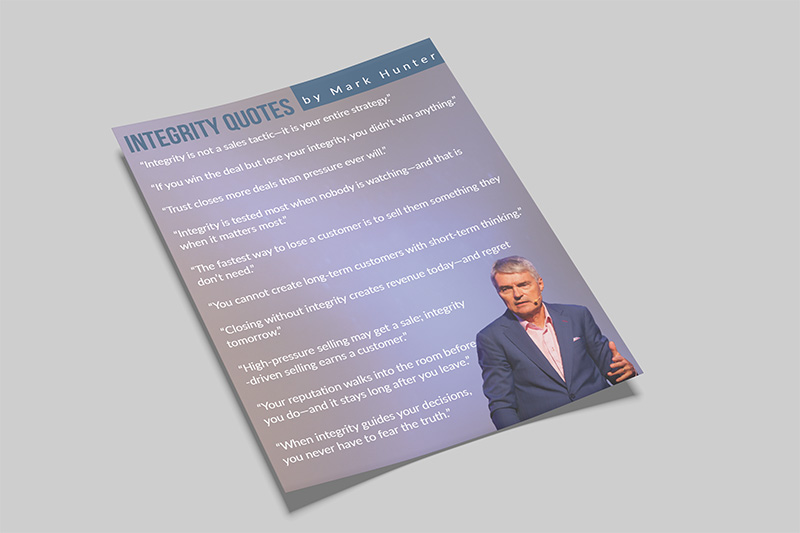
Integrity matters. Don’t inflate what you can do to justify your price. Be accurate and honest in describing your value. You never need to make wild claims if your offer stands up on its own. Try creating an ROI worksheet, not just for your customer, but for yourself. Calculate the total cost of ownership and the genuine gains the customer receives. This simple step will boost your confidence and help you defend your price with integrity.
7. Prepare before your next price conversation
Preparation is your best defense against discounting under pressure. Before your next pricing discussion, write down three concrete outcomes your offer delivers. Then, craft one question designed to uncover the real objection.
When you can guide the customer to see, for themselves, the value you offer, you’re far more likely to close the sale at your true price. If you don’t believe in the value you deliver, no discount will fix that.
Discounting is easy. Defending your price takes courage and preparation. If you’re ready to sell with confidence and integrity, start here. Build real understanding, communicate real value, and prepare for those tough conversations. Great selling always starts with belief in yourself, and in what you offer.

5 Conversation Strategies that Fill Pipeline Better than Chasing Leads
Do you need better leads, or is it time for better conversations?
Find episode #457 wherever you download podcasts!
The Real Cost of Low Confidence in Sales
LIVE NEXT THURSDAY
Mark breaks down the subtle signs that show customers you doubt your own value.
Episode #458 is out NEXT THURSDAY!

Copyright 2026, Mark Hunter “The Sales Hunter” Sales Motivation Blog. Mark Hunter is the author of A Mind for Sales and High-Profit Prospecting: Powerful Strategies to Find the Best Leads and Drive Breakthrough Sales Results.