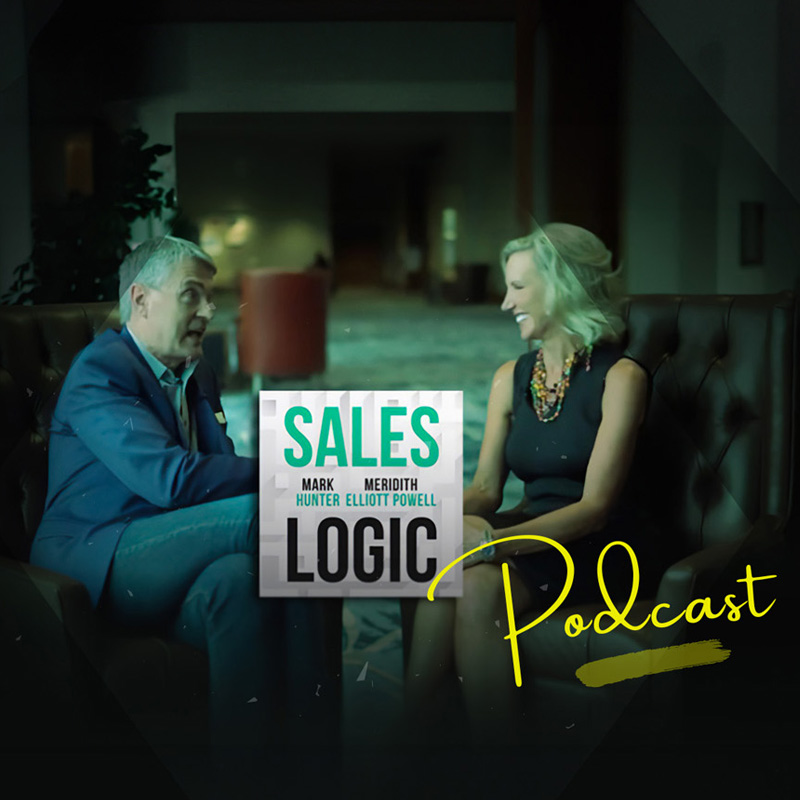
On a recent episode of The Sales Hunter Podcast, Mark sat down with Shari Leid, creator of the “Flip the Box” movement, speaker, and author, whose journey from orphaned beginnings in South Korea to deep connection advocate has inspired thousands. Shari joined to break down how limiting beliefs sabotage sales success and reveal a practical way to “flip” your mindset fast.
The Search for Connection—and What Blocks It
It’s not always the sales tactics or your CRM that holds you back. Often, it’s your own story about yourself. Shari explained how her origin story—being found as an infant in a cardboard box—left her searching for belonging everywhere she went. The box was more than history; it was a metaphor for internal limits.
What started as a personal quest evolved into a powerful exercise in connection and mindset. Shari set out to visit all 50 states, sharing a meal with a stranger in each, and asking one key question: how do you create community and belonging?
Here’s the lesson she brought back:
“Throughout my life, this box would pop up into rooms, you know, telling me, you don’t belong here… And what I realized is I had also symbolically taken that box I was found in and flipped it and became a table of connection and belonging.”
Introducing the FLIP Framework
Sales pros hit a wall when they stay trapped in their own heads—worried about sounding smart, “saying the right thing,” or “deserving the room.”
Shari’s FLIP framework is a four-step method to break that cycle. Here’s how it works:
Focus
Shift the spotlight from yourself to the person right in front of you. Stop entering calls obsessed with your pitch. Instead, get curious and present.
“F, don’t focus on you, focus on who. Meaning focusing on the person in front of us.”
This small act dismantles nerves and unlocks influential questions.
Listen
Too many sellers “listen to reply.” The best listen to understand.
Instead of jumping in with solutions, listen for meaning beneath the words. What do they truly care about right now?
“Step number one, focus tells you who matters. Step number two, listen tells you what matters.”
Ignite
Connection dies when salespeople default to “control mode.” Flipping the script means inviting collaboration, not dictation. Ask yourself: what can I ignite in this person? How do I make them feel seen and a part of the process?
“When we choose control, all of a sudden we’ve turned that person into an observer instead of a participant.”
B2B deals are wildly emotional—never underestimate the power of inviting real participation.
Play
Playing “small” kills energy and trust. Top sellers embrace their authentic selves—their “weird”—because that’s what builds standout credibility. When you play ball, you show up in the game, fully you, confident enough to let that shine. Clients always know when you’re holding back.
“When you embrace your fate or your destiny, you embrace your weird. That helps you stand out, and you’re able to play big.”
Mindset Drives Performance—Every Call, Every Meeting
Shari’s encounters across America confirmed it: your energy and self-perception precede every outcome. Sellers searching for rejection or skepticism will always find it. Those who search for belonging, creativity, and connection will unlock it instead.
“People see what they’re looking for.”
Set the right intention before every sales meeting—walk in with “heart forward” energy. Presence matters, whether it’s in person or on Zoom. Even your posture can signal whether you are ready to lead—or ready to run.
Sales leaders know: the person who walks in confident and genuine is someone clients can trust with their business.
Make FLIP Your Habit
Turning the FLIP method into muscle memory isn’t about overnight change. After every interaction, check in: Did you focus fully? Did you listen deeply? Did you ignite collaboration? Did you play, or did you play small?
Practice walking into meetings with physical presence and energy that invites trust. Show clients you belong there—and that they do, too.
The difference between average and top sellers is often just this: a mindset open to connection, confidence, and possibility. Flip the box. Play big. The rest will follow.

Mark Hunter :
You’re doing good in sales, but you’re not getting to the next level because your mindset is blocking you. Hey, with me today, Sherri Lead. We’re going to talk about Flip the Box. Oh, why am I talking? Let’s get the show going right now.
Speaker B :
You’re listening to the Sales Hunter Podcast with Marc Hunter, where the focus is to help you as a sales leader sell with confidence and integrity. And now here’s your host.
Mark Hunter :
It’s time you flip the box and you’re kind of wondering, where is this going? Well, hey, Sherri Lee, welcome to the show. First of all, why don’t you explain just a little bit about what Flip the Box is? Then I want to get into this whole mindset thing.
Sheri Leid :
Yeah, sure. I’ll give you the short background story of Flip the Box. So, I traveled across the US in 2023 to all 50 states, and in every state, I shared a meal with a stranger. And the quick background was I had been orphaned, orphaned as a baby and found in Seoul, South Korea, and I was found in a cardboard box. I learned about this in my teenage years. And in that messaging that I got when I found this backstory out, I also learned that things like my birth date was not my real birth date. So So I was found without any identifying information. And throughout my life, this box would pop up into rooms, you know, telling me, you don’t belong here.
Sheri Leid :
So part of my travels around the US, I was searching for that sense of belonging, that sense of connection. And I would ask these strangers, how do you create community? How do you create connection? And I found that in my travels. And what I realized is I had also symbolically taken that box I was found in and flipped it and became a table of connection and belonging. And so now everything I do comes under the terms Flip the Box. It is now nationally recognized by the National Archives, March 5th, a day to simply ask somebody to share a meal with you. From there, it became a movement, and now it is a method for connection that I, I teach associations, conferences, business owners, teams how to connect. And I like to say, in 60 seconds or less with anyone you choose to.
Mark Hunter :
Okay, we got it. We’re going to unpack this because I see so many applications, whether you’re a sales leader or a salesperson, about, hey, how do you create a stronger connection? How do you do that? Because again, I was talking to— I was coaching a person today and they were having problems making these connections, making these relationships. You’re going to show us how. I also see that as a mindset, because for you to go 50 states, 50 meals with people you don’t know. That’s a mindset shift. And again, every salesperson I know has got some sort of a limiting belief that is blocking them. So, okay, the floor is yours. Talk to us about Flip Talk because I know you’ve got kind of an acronym as to what Flip stands for.
Sheri Leid :
Yes, I do. And I also like to say, you know, we could work on our mind shift, but we also have to have an identity shift.
Speaker B :
Yeah.
Sheri Leid :
So not simply, you know, thinking, okay, this is why I need to do what I need to do. We need to actually do it, right? We need to actually get into the game. I like to say, and you’ll hear in this Flip the Box, the 4th one is don’t play small, play ball. You gotta get in the game. So FLIP is now a 4-step method, easy, repeatable, F-L-I-P. And in this practice, I believe you can get that mind shift and actually embody it. And the more you practice it, it becomes automatic. And you can, like I say, you can at least connect with anyone you choose to in 60 seconds or less.
Sheri Leid :
Now, deeper connections will take time, but this lays an amazing foundation.
Mark Hunter :
Let’s, let’s go through those 4 steps.
Sheri Leid :
I want to hear. Okay, you ready? Okay, the first one, F, is focus. F, don’t focus on you, focus on who. Meaning focusing on the person in front of us. So many times we go into a meeting, a sales call, uh, a room, and we’re so focused on what we’re going to that we’re not focusing on the person in front of us. And so, that’s the first step. And we get nervous, right? I was surprised as I traveled around the US, and I would contact— because a lot of these people were strangers, I’d tell them my project, that I’d want to sit down and talk. And the response that I got, which surprised me, by more than one person was, I don’t know if I’m interesting enough for you.
Sheri Leid :
And for me, that—
Speaker B :
Oh, wow.
Sheri Leid :
Yeah.
Mark Hunter :
That is a limited— wow.
Sheri Leid :
Yeah, but that told me how we’re walking many times into rooms. We’re walking thinking, I need to appear a certain way, I need to say something brilliant, I need to do this so the other person will think they’re not wasting their time with me. And, you know, salespeople do this too, especially maybe newer ones that really want to make that sale, make that quota. They’re focusing on them, they’re focusing on how they’re going to deliver this, and they forget to focus on the person in front of them. So step number 1, don’t focus on you, focus on who. And that’s It helps you become curious about the person in front of you, and it helps you ask the questions that you need to make that sale. I love that.
Mark Hunter :
So what’s the L?
Sheri Leid :
The L is for listen. Don’t listen to reply. Listen to identify. Identify the meaning underneath what’s being said. You know, so many times we can focus on the person, but then while they’re talking, we’re, we’re, we’re still thinking about, okay, this is, you know, they’re gonna say this, so I’m gonna just reply with this instead of really listening to the meaning underneath the words. Why are these their concerns? And their concerns may not be cookie-cutter concerns. They may be specific to their business and what they’re going through now. So step number 1, focus tells you who matters.
Sheri Leid :
Step number 2, listen tells you what matters.
Mark Hunter :
Okay. And the I?
Sheri Leid :
And the I. Okay. Don’t choose control. Ignite the soul. You know, Mark, have you ever had a time where you focus on the person, you listen to them, But then you still feel like you’ve lost them. I mean, that might not have happened to you before, but—
Mark Hunter :
Oh, hell yeah.
Sheri Leid :
And you know what? I think a lot of times that happens because we make the wrong choice. And we can do this, especially when we’re leading teams, when we’re even honestly parenting. We focus, we listen, and then we go into control mode. We try to clean up the situation. We tell people how things need to be done, and this is the order of things. And we lose that connection. And that’s why I is for ignite the soul. And so you focus, you listen, and you stay connected with the person in front of you.
Sheri Leid :
Get them excited about the process, invite them in. So, because when we choose control, all of a sudden we’ve turned that person into an observer instead of a participant. Okay.
Mark Hunter :
Before we go to P, I wanna unpack this I some more because sales is far more emotional. And I hear this all the time. Well, B2C, business to consumer, that’s emotional. But B2B is not. Oh no, B2B is far more emotional than we give it. And this whole ignite the soul, I think you’re creating a chemistry of a relationship between 2 parties. Is that—
Sheri Leid :
Yes, exactly. And it becomes collaborative. So even though you’re selling, they’re buying, you’re making this contract, It becomes collaborative. And no matter what it is on the table, once you feel like you have a part of this and you’re able to participate, you feel good about it.
Speaker B :
Mm-hmm.
Sheri Leid :
And it’s a totally different feeling than when— I’ve done this with car sales as a consumer, walking out of a place thinking, gosh, I’ve just been had. Because all of a sudden, in that place where we’re contracting, I— they’re telling me what I need to do, where I need to sign, and they’ve lost me. And I don’t feel good about in the end, and I’m not coming back to them. I mean, uh, but a collaborative process where me as the buyer, I feel like, okay, I’m asking questions, I’m still in, we’re still talking about the features I like, you know, we’re still talking, they’re still asking me questions as I’m going along with this. I see that they’re seeing me, and it’s a whole different experience. And yes, I’m going to come back to you because you’ve also built that trust. So letting go of control and igniting the soul doesn’t mean that you still don’t— aren’t in charge of everything. It just means that you’ve gained the trust to be the one that’s leading.
Mark Hunter :
And I can’t do that unless I first F, focus, and listen.
Sheri Leid :
Exactly.
Mark Hunter :
There’s no way I can ignite— I can ignite a fire for them to say, you’re out of here, I’m out of here. But I can’t ignite the soul in a positive relationship. And ultimately, That’s where we have to get to in any kind of selling, any kind of leading situation. Like you mentioned parenting.
Sheri Leid :
Yes.
Mark Hunter :
With my own kids. You’re right.
Sheri Leid :
Yes.
Mark Hunter :
Man. Okay. Okay. You got us. You ready for the P?
Sheri Leid :
Okay. Yeah, because it’s not the FLY formula, right? It’s the FLIP formula. So, there’s step 4, P, and that’s don’t play small, play ball. And I look at that in 2 different ways. Yes, you have to get into the game. But I like to share with people that the word weird— weird— the root of the word weird is spelled W-Y-R-D, and it means fate or destiny. And so when you— yes, you could look that up.
Speaker B :
Wow.
Sheri Leid :
And so when you embrace your fate or your destiny, you embrace your weird. That helps you stand out, and you’re able to play big, you know, and you’re able to— because if you think of the people who are good salespeople, the people on top, the people who are leaders, the people you admire, There’s something a little weird about them, right? There’s something unique about them. And it’s because they can, you know, people talk about authenticity. They throw that word around a lot. And I believe what that is, is somebody has embraced their weird. They’ve embraced their personality. They use it to their advantage. And that also builds trust.
Sheri Leid :
And they stopped playing small. They stopped playing in a box and acting the way they should act. All, you know, if they think, oh, I need to be buttoned up. To make the sale, to talk to these CEOs, talk to these founders. Instead, okay, you know, obviously you’re not gonna do something torrid, but you’re also not gonna hide your personality. You’re gonna use your personality to help gain that trust. So don’t play small, play ball, embrace your weird, embrace what makes you unique. And, and that’s the 4th step: focus, listen, ignite, and play.
Mark Hunter :
Okay, play ball. Does that mean play bigger ball?
Sheri Leid :
Yeah, well, one, play, play, play in the game, play it yourself. And also you could look at it as if you’re a team member or you’re a team leader and you’re hiring team members. Just because one person, you know, took the spot of another doesn’t mean they have the same skill set, and you wouldn’t know it unless you got into the game and looked at who— what your team is doing. And so you have to get into the game no matter what it is, whether you’re leading a team, whether you’re talking to different clients or customers. And you have to be your authentic, true, weird self to really play big and play in the game.
Mark Hunter :
Yeah, because I think if you’re doing the, the, the F, the L, and the I, playing ball is going to give you a— I don’t want to say a license, but a level of confidence that I play bigger. Because again, I come back to the single greatest problem salespeople have. is selling themselves to themselves. They just can’t get past— I encounter this all the time. And when I look at top-performing salespeople, I mean the ultimate top 1%, they have a level of passion and focus on—
Sheri Leid :
And is there something a little different about them that makes them unique?
Mark Hunter :
Yes, yes. And the uniqueness The difference may be just the fact that they are driven. They’re absolutely driven because they are committed to the outcome that they know they can help that person achieve if they would engage with them. So, I mean, I love, I love the direction of where this is, you know, is going. But Flip the Box— I want to come back to Flip the Box and 50 Dinners, 50 States.
Sheri Leid :
Mm-hmm.
Mark Hunter :
What’s that one story, that one state, that one dinner that just stands out in your mind? Says, wow, lesson I learned.
Sheri Leid :
Okay, well, this is— there are several, but I’m going to share with you the story, or with your listeners, because I shared this story with you. It’s one I say often because this, this story changed my life. So in Virginia, I met a woman named Megan. She was blonde-haired, blue-eyed, a makeup artist, very successful, and her maiden name was Wilson. But when she got married, she took on her husband’s Japanese last name, Yamamoto. So I asked her, was it hard to take on a name so different than your own background? And the funny thing was, is she said, Sherri, it wasn’t hard for me. But here’s the funny part. After I changed my name from Wilson to Yamamoto, I got booked solid with Asian wedding parties.
Sheri Leid :
And then, Marc, she said, what’s even funnier is often while working on my clients, they looked and said, I see it now. I see the Asian features in you, pointing out Asian features that blonde-haired, blue-eyed Megan clearly doesn’t have. And while we were laughing, this is what Megan said that changed— really changed my life. She said, people see what they’re looking for. People see what they’re looking for. And from that moment on, I personally— I told you I’d always been looking for connection, belonging. I stopped looking for all the places I didn’t belong and started to look and see all the places where I do. And you start this conversation talking about mindset, and that is exactly what we’re talking about, is if you’re looking for all those places where you’re lacking, you’re going to find them.
Sheri Leid :
If you’re looking for all those sales that are not gonna— not gonna mesh and not gonna come to fruition, you’ll find those. If you’re looking for that client that’s going to doubt you and not trust you, oh, you’re gonna— they’re gonna— Do exactly that. But if you’re looking for connection, if you’re looking for, um, creativity, inspiration, that is what you’re going to find. You see what you’re looking for.
Mark Hunter :
Okay. You just reinforced an expression that I’ve said for years. Your mindset going into a call predetermines the results you’re going to get coming out of it.
Sheri Leid :
Absolutely. Energy, energy precedes outcome.
Mark Hunter :
Energy precedes outcome. That is so powerful. Talk to salespeople, talk to sales leaders about how you think they should apply FLIP, F-L-I-P.
Sheri Leid :
Well, I do have an app that they could—
Mark Hunter :
Ah, okay.
Sheri Leid :
Wow.
Speaker B :
It’s free.
Sheri Leid :
And I’ll send you that information. I’ll send you that information, Marc.
Mark Hunter :
Yeah.
Sheri Leid :
But basically, it’s a self-check-in to see— I say, use it after every conversation to see if there may be an area that you realize, ah, I didn’t listen. Or, man, I went into control all of a sudden. And then you could start making these your habits. When you walk into a room that you’re focusing, you’re listening, you’re igniting, and then you’re having fun, you’re playing. So there are so many different ways to use it. But ignite— one thing I do tell people is, When you walk around, or when you look at animals, right, in the wild, even from afar, you know which animal is the leader, right? It’s the animal that’s standing proud, that’s walking proud. And you know the animals that aren’t, they’re kind of hunched over, or even an injured animal will be hunched over. Well, think about how we operate as humans, right? We’re on our phones, we’re on our computers, we’re kind of hunched over all day long.
Sheri Leid :
Well, if you’re walking into that sales meeting or any meeting on your phone or walking like you’ve, you know, looking at something and you walk in with that hunched over, you’re immediately not connecting. So I would say for starters, when you walk into a room, think of walking heart forward. Talk about energy precedes outcome. Walk in heart forward, walk in like that leader of the pack. And that alone will change things.
Mark Hunter :
Wow. I love what you’re sharing there because again, our mindset really does drive so much of our behavior.
Sheri Leid :
Mm-hmm.
Mark Hunter :
And back up the bus because you also said, you know, in terms of the impression or the presence, because our presence we create, whether it be getting on a Zoom call, Teams call, phone call, tech, it doesn’t matter. Our presence Speak so loudly.
Sheri Leid :
Yes. And that could remind you too, if you think about that, just think of the visual in your head about the way animals move and the way you want to present. Do you want to present as an injured animal or do you want to present as a leader? And for those who are just listening, I’m kind of making these body motions of, you know, looking at my phone versus sitting up heart, heart forward, because that makes a big difference because changing your physicality can remind you to change your mindset. Right? It’s all connected. And just the way you, you know, pay attention today for the rest of the day, how you’re walking into the room. Are you walking in heart first? Energy precedes outcome. Or are you walking in looking at your phone, looking at your papers, walking in like that injured animal?
Mark Hunter :
The injured, the injured animal who is, who is behaving like an injured animal quickly becomes the dead animal. Because, right, right.
Sheri Leid :
I mean, yeah, they look, yeah, they look like somebody’s ready to pounce, right? They look like food.
Mark Hunter :
Somebody can take them all. But the animal who is confident has much more likelihood to rule the kingdom. And it’s the same thing in our behavior. I mean, this is something. This is, you know, it’s funny. But I’m thinking about this from a sales manager standpoint, salesperson. It’s not from arrogance. This is from— this is confidence.
Sheri Leid :
And it’s about building trust, right? I want to, if I’m going to trust, you know, if I’m Putting my money, my resources in your hands for whatever product or service. This is something that I’m trusting you.
Speaker B :
I want—
Sheri Leid :
I need to trust you that you’re going to deliver. I need to trust you that this is going to make my life easier, my business grow, whatever it is. And I’m not going to trust you if you already look like you can’t take care of yourself. You know, I’m going to trust you with this if you walk in and look like, I’ve got this. Mm-hmm.
Mark Hunter :
I’ll tell you what, it sounds so basic and yet so many salespeople. I had a VP of procurement tell me one time, he says, I tell all of my buyers, all my procurement agents, if the salesperson doesn’t come in with confidence, a strong voice and body language, there’s a discount to be had. they don’t believe. And you have just confirmed that in so many ways.
Sheri Leid :
Yeah. Yeah.
Mark Hunter :
Hey, Sherry, how do people get in touch with you? Because you’ve got the app. So we got to make sure we get the link to that in the show notes. But how do people get— because you are doing a tremendous amount of work around the country.
Sheri Leid :
Oh, I’m working so much, Mark. But it’s stuff that I like. So it feels good. I finally have a life that I don’t want to take a vacation from. I love the work I’m doing.
Mark Hunter :
I love that. What a great— what that means, that means you are practicing FLIP.
Sheri Leid :
It is. I used to, you know, we spoke a little bit before we went on, um, on air, and I was telling you that I used to be a criminal prosecutor. That was a job I wanted to take a vacation from. This is what I do now. I don’t, I don’t need a vacation from my life. And people can get a hold of me at sherrylead.com, and my name is spelled S-H-A-R-I-L-E-I-D, as in David, dot com.
Mark Hunter :
I love that.
Sheri Leid :
Yes.
Mark Hunter :
And, and we’ll put, again, put that in the show notes because again, it’s so critical. But you’ve got such a valuable message. We’ve been talking today with Sherri Lead, Flip the Box. And I’ll tell you what, it’s a story you’ve got to hear. She is absolutely incredible. I’ve gotten to know you well over the last year or so. It’s been a pleasure. Anyway, hey, why do we do the podcast? Do it for one reason.
Mark Hunter :
It’s to help you see and achieve what you didn’t think was possible so that you could flip the box. And Sherry Lead every week is an expert, and she’s the expert this week. She’s the one who’s helped us flip the box. Hey, there’s a second episode which comes out on Mondays of each week where I just unpack a single topic. Hey, again, why do I do it? It’s to help you see and achieve what you didn’t think was possible. Do me a favor. Leave me a review on your favorite podcast app, and I’ll see you on the next episode. Great selling.